
How did trousers made for hard work become something people wear to express who they are?
A pair of jeans can be practical clothing, a statement of independence, or an object prized for its craftsmanship. Its basic form remains familiar, yet the reasons people choose it can be very different. That is what makes denim such a useful story of cross-border innovation.

A global story with a complicated beginning
The familiar account starts in France, with “serge de Nîmes” becoming denim. The history is less tidy. In A Short History of Denim, Levi Strauss & Co. historian Lynn Downey explains that the connection is debated. Earlier fabrics bearing the Nîmes name included wool or silk, while denim was cotton. A similar name does not establish a straightforward line of descent.
The related term “jean” has its own connection to cloth from Genoa, Italy, and trade with England. Fabric names, weaving knowledge, and production moved between places over centuries. The more useful starting point is a network of textile traditions and trade, rather than one country inventing the finished garment.
America: improve the point that fails
The California Gold Rush helped create a market for supplies and durable clothing in the American West. But the famous patent came later. On May 20, 1873, tailor Jacob Davis and merchant Levi Strauss received their patent for reinforcing work trousers with rivets. As Levi Strauss & Co.’s account explains, denim work trousers already existed. Riveting their stress points was the important improvement.
That distinction makes the innovation more interesting. The opportunity was in understanding where an existing garment failed and making it more useful. Davis contributed a practical solution; his partnership with Strauss helped bring it into production.
Seen through our framework, the objective was durability. The mechanism combined sturdy cloth with reinforcement where strain was concentrated. The conditions included workers who needed hard-wearing clothing, access to suitable fabric and hardware, and the ability to produce and sell it.
From useful clothing to cultural expression
Over time, jeans acquired associations that reached beyond their original job. Western films and advertising helped connect them with cowboy life. Levi Strauss & Co.’s archive documents cuffed jeans in John Wayne’s 1939 film Stagecoach and in Western-themed promotion.
In the 1950s, another meaning grew stronger. The Museum at FIT’s denim exhibition describes how films such as Rebel Without a Cause helped associate jeans with teenage rebellion. A garment linked to labor could now communicate independence.
The product’s value was changing because its context was changing. People could buy a familiar pair of trousers for a new reason. For a business entering another market, this is an important possibility: local customers may recognize the product while interpreting its significance differently.
Japan: an imported idea meets local capability
Japan’s contribution adds another layer. Kojima, in Okayama Prefecture, had an established clothing industry, including school-uniform production. The Japan National Tourism Organization’s history describes jeans being made there in 1965 with materials imported from the United States.
The opportunity could develop because local manufacturing knowledge already existed. An outside product gave those capabilities another application. Elsewhere in Japan’s textile industry, Kaihara developed its own rope-dyeing equipment in 1970, a milestone recorded in the company’s history. This was technical development as well as cultural enthusiasm.
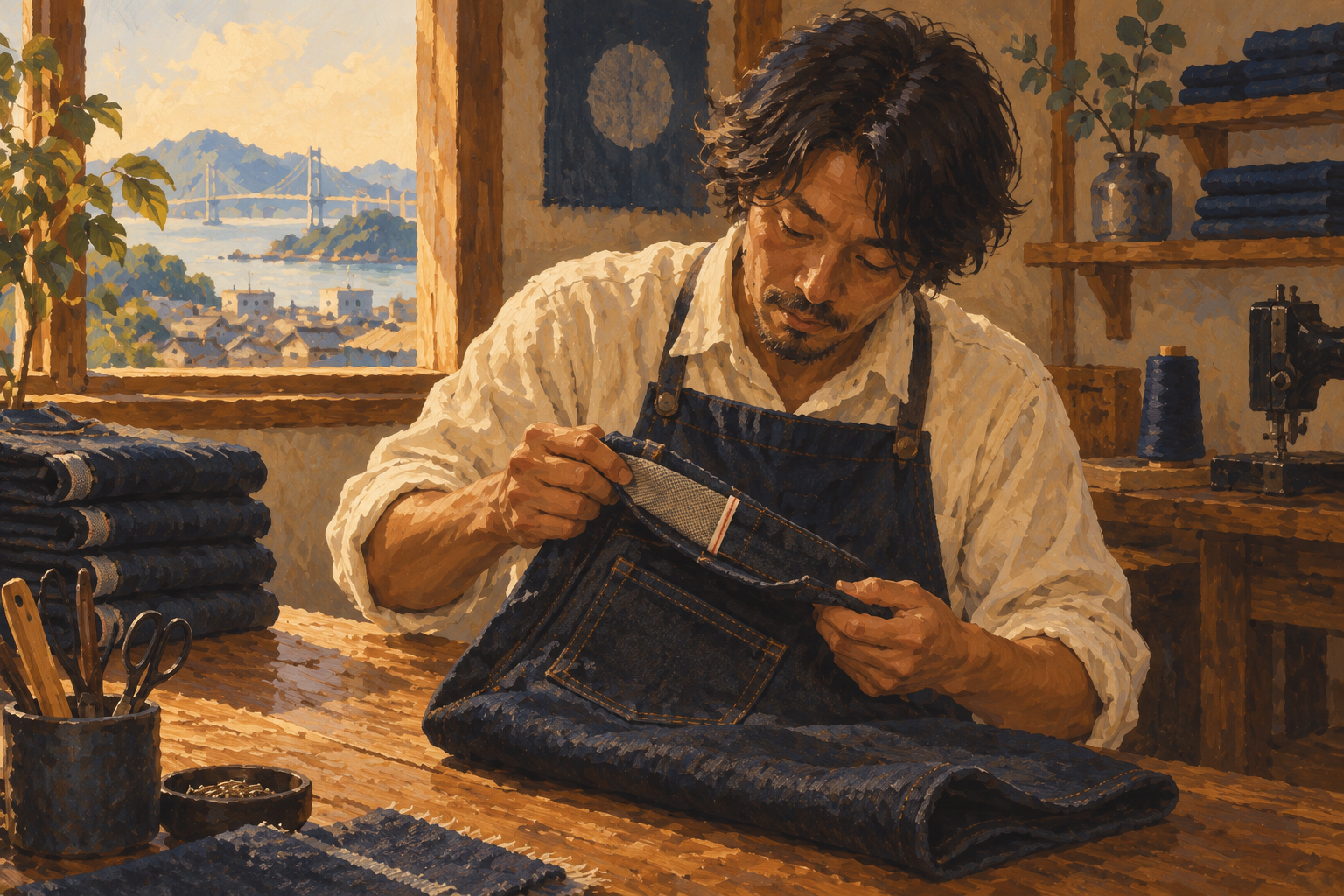
Selvedge offers a revealing detail. It is the finished edge of woven cloth that helps prevent unravelling. It predates Japan’s jeans industry: early American jeans used selvedge denim too. Its appeal in specialist denim shows how an established production feature can become something customers actively seek and appreciate.
Kojima now offers another kind of value. Its Jeans Street, shops, and museum make denim part of a destination. Manufacturing skill can support a wider local economy through retail, learning, and visitors’ interest in how things are made.
The conversation keeps changing
Even a contemporary advertising campaign can reveal how much meaning denim carries. American Eagle’s 2025 campaign with Sydney Sweeney placed jeans at the center of a celebrity-led fashion story. The surrounding debate, reported by the Associated Press, was another reminder that audiences bring their own cultural interpretations to a brand’s message.
For cross-border work, that is a practical consideration. The garment can travel more easily than the assumptions surrounding it. What signals independence, quality, status, or everyday comfort in one setting may communicate something different in another.
Look for the capability, then test the opportunity
Denim’s evolution involved several kinds of change: a functional improvement in workwear, new cultural meanings, and production shaped by local expertise. These changes did not all pursue the same objective. Durability, self-expression, and appreciation of craft are different reasons to buy.
That is why Objective, Mechanism, and Conditions are useful questions to revisit when an idea crosses a border. What result matters to customers here? How could the product deliver it? What has to be true for that mechanism to achieve the objective?
A place with sewing skills might explore manufacturing. A place with a strong design culture might develop a distinctive fit or finish. Neither is automatically an opportunity. Both require evidence about customers, costs, quality, and the capabilities needed to deliver.
A question to take with you
What familiar product could your local expertise help people value differently?
Start with a capability your community already has. Then explore who would value its contribution, and what you would need to learn before investing.
Keep exploring
Follow the historical sources linked throughout this article, or explore PBS American Experience’s Riveted: The History of Jeans for a broader view of denim’s cultural history.
For another example of ideas changing as they travel, read the story of salsa across borders.